Biography
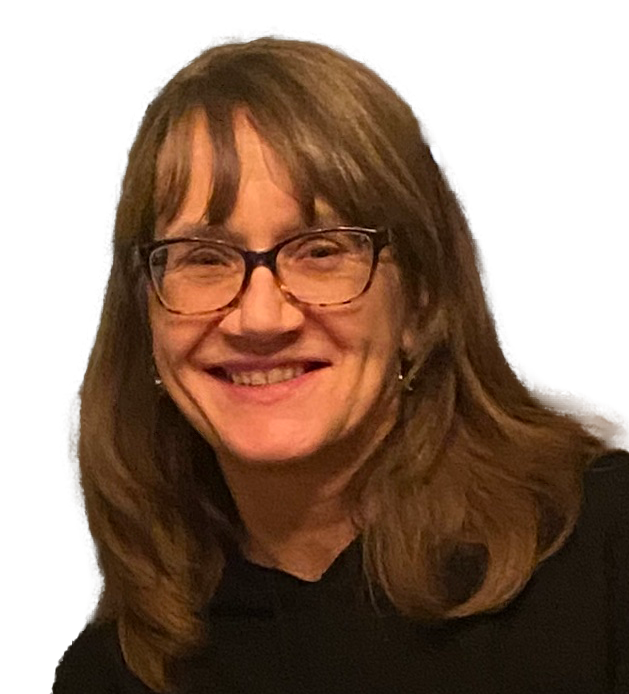
Nicola Ferrier is a Senior Computer Scientist in the Mathematics and Computer Science (MCS) Division of Argonne National Laboratory and a Research Fellow in the Northwestern Argonne Institute for Science and Engineering. Ferrier’s research interests are in the use of artificial intelligence and computer vision to control robots, machinery, and devices, with applications as diverse as medical systems, manufacturing, and biology. Prior to joining MCS in 2013 she was a professor at the University of Wisconsin-Madison where she directed the Robotics and Intelligent Systems lab (1996-2013). Ferrier earned her Ph.D. in Computer Science and a Master’s in Engineering Science from Harvard University, and a Bachelor’s degree in Mathematics from the University of Alberta. She was a postdoctoral scholar at Oxford and Harvard.

Talk: “Towards Humanoid Robot Laboratory Assistants”
Abstract: Automating scientific discovery requires speeding both cognitive tasks (literature review, design, data analysis) and kinetic tasks (preparing samples, configuring instruments). AI has dramatically accelerated cognitive work, but progress is limited by manual physical tasks and the impracticality of scaling human labor or tailoring automation to every protocol. To achieve large-scale acceleration, lab automation must adapt to diverse tasks, environments, and robotic forms.
Argonne’s Rapid Prototyping Lab has developed three Robotics Assisted Platforms for Intelligent Design (RAPID) facilities for biology and physical sciences. Fixed-station robots automate isolated experiments, yet real-world protocols are multi-step and require moving materials across constrained spaces, sometimes with humans present. Scalable automation thus calls for combining fixed robots with dynamic, dexterous humanoid robots that can operate in human spaces—turning valves, loading plates, and transporting samples—with minimal retrofitting.
We report initial work training humanoid robots for laboratory tasks and outline key requirements for successful autonomous lab assistants: multimodal sensing, foundation models, physics-informed learning, digital twins, and rigorous benchmarking. The goal is reliable, flexible automation that accelerates discovery while reducing manual workload.